

UC’s Problem: Upholding the Status Quo
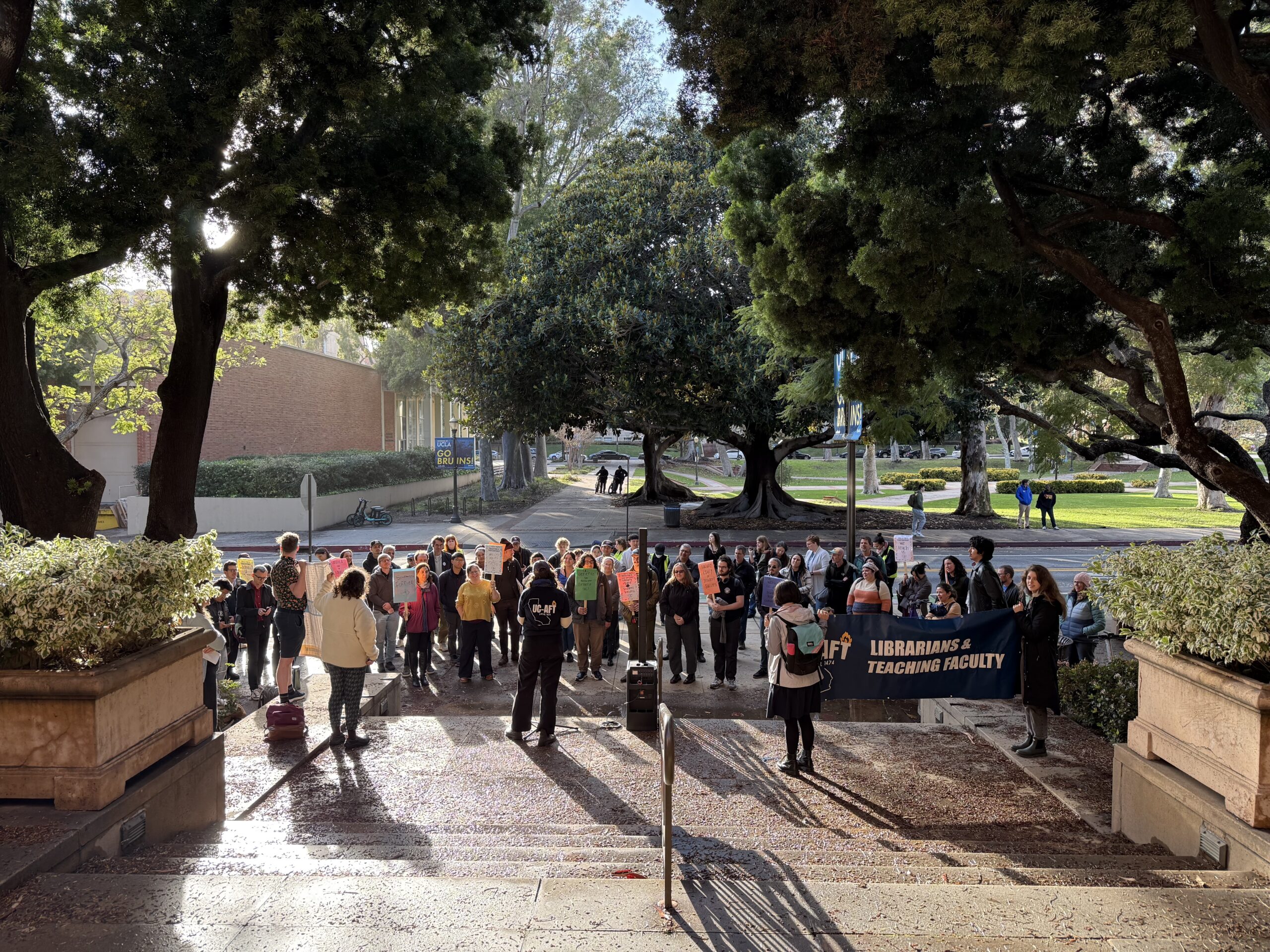
Even before the Trump administration issued its sweeping and unlawful orders barring DEI, our teaching faculty colleagues from marginalized backgrounds faced tremendous challenges on campus that undermined their rights at work. Now, as we confront unrelenting attacks on campus and beyond, we have seen campus administrators buckle under pressure, conceding to bad faith charges and unlawful executive orders that further jeopardize teaching and learning at our University. UC administrators claim they will defend us and our students but too often, they offer the bare minimum protections required by law. In this contract fight, UC-AFT members have committed themselves to advancing a racial and social justice agenda in the hopes we can create a more equitable and inclusive UC for all.
In consultation with the Anti-Racism Committee, your UC-AFT Table Team has put forward the following proposals:
Article 4: Non Discrimination in Employment (current article here)
Proposed changes will make Article 4 stronger and enforceable by:
- Adding language that outlines the University’s commitment to fostering a workplace free from discrimination, subordination, harassment, retaliation, and abusive conduct;
- Expanding and contextualizing definitions of protected identities to be more explicit about race, religion, immigration status, gender identity and expression, and physical and mental disability;
- Adding language that protects Unit 18 faculty from association-based discrimination and retaliation;
- Adding language that addresses barriers to employment and promotion for historically marginalized people and ensures equitable access to employment opportunities;
- Adding language that protects Unit 18 faculty from retaliation for reporting (of discrimination, harassment, sexual harassment, abusive conduct), filing a grievance, requesting accommodations, engaging in any union activity, or exercising their rights;
- Adding language that defines abusive conduct and outlines how to address abusive conduct in the workplace (See the UC Abusive Conduct in the Workplace Policy and UAW’s Respectful Work Environment contract language);
- Requiring the university to provide and inform U18 faculty of accessible campus resources, including lactation spaces and all-gender restrooms;
- Refining procedures to strengthen grievability and arbitrability and ensure timely formal investigations, and delineate an arbitrator’s remedial authority.
Article 34: Immigration Reform and Control Act (current article here)
A vestige of the employer sanctions codified in the 1986 Immigration Reform and Control Act, this article outlines protections and procedures for Unit 18 faculty on non-immigrant visas. In our current contract, the article is short, with limited specificity, leaving teaching faculty vulnerable. UC offers little support in the visa application process and to those facing issues, and sometimes fails to rehire them when they lose work authorization.
At a moment when our immigrant neighbors are under attack, we want to expand Article 34 to include new language that:
- Clarifies that International Students & Scholars Offices (ISSOs) are responsible for managing visa paperwork for Unit 18 faculty, as they do for senate faculty;
- Strengthens protections for Unit 18 faculty who lose work authorization;
- Expands assistance to Unit 18 faculty facing immigration issues, including regular workshops, paperwork assistance, and legal resources;
- Promotes UC’s sponsorship of more appropriate visas and permanent residency for Unit 18 faculty, as they do for senate faculty;
- Clarifies protections for personal information;
- Strengthens protections against immigration enforcement on campus.
Article 2: Academic Freedom (current article here)
The pursuit of knowledge requires that we ask difficult questions. We believe that our professional judgement, and not university administrators, should serve as a guide to what we teach in the classroom. When academic freedom is attacked, we all suffer, and our colleagues from historically marginalized backgrounds are often the most vulnerable. Another of our major Bargaining Priorities for this campaign is to address the attacks on academic freedom on campus by protecting faculty’s ability to teach, research, and speak openly without institutional interference, as outlined in Article 2. Read more about our Article 2 proposal here.
Leave a Reply