Key Takeaways
- We passed our Academic Freedom proposal at one of the campuses most impacted over the last several years.
- We had powerful personal testimony from five Unit 18 members who were personally affected by university discipline for exercising their free speech.
- We’ve also won on ground rules. The deal isn’t done, but we’ve already secured big, open, and most importantly hybrid bargaining!
Article 2: Academic Freedom
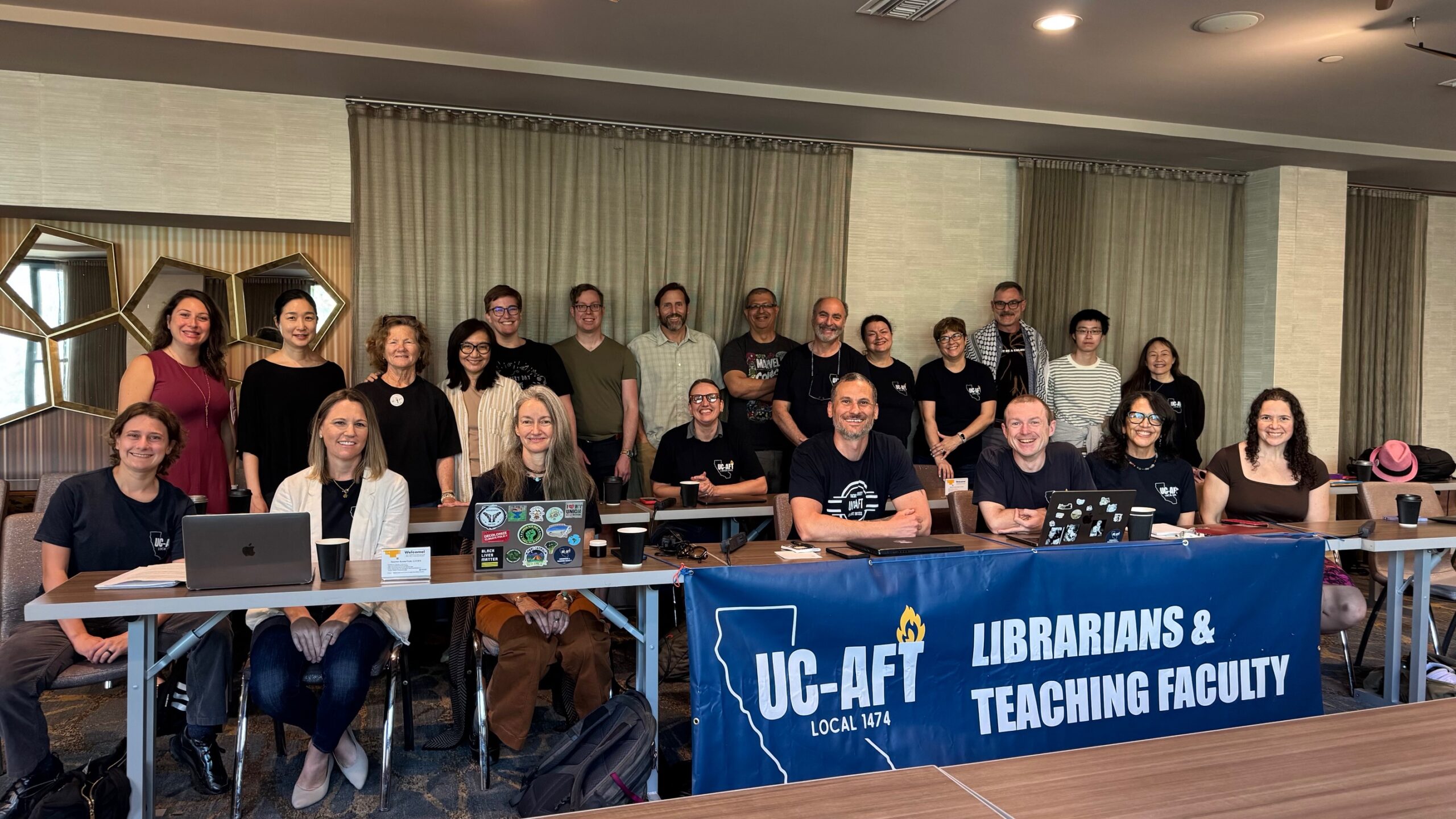
Members of your UC-AFT Table Team convened another session with UCOP at UCLA on Thurs. March 19th. The big action of the day was when we passed our proposal on article 2 – academic freedom. Our proposal includes significant changes to both the definition of academic freedom and the process by which claims that academic freedom has been violated are adjudicated. Fundamental to these proposals is the recognition that our jobs are different from those of senate faculty, who don’t teach as many students as we do on average. Unit 18 teaching faculty also have much closer and more direct interactions with undergraduates than most tenured professors. Our jobs put us on the front lines of every controversy, political problem, and social issue in ways that senate faculty don’t. Nonetheless, our current contract language says that the only way we can raise claims that our freedom has been violated is through the academic senate.
Our proposal expands the definition of what academic freedom is to include rights to speak about any social issue in the classroom, to participate in political action both on and off campus, and to talk about current or historical events in any non-campus space (digital or physical). We then proposed a mechanism to defend these rights where if a lecturer raises a claim about a violation of their academic freedom, it will be decided by a panel of lecturers, not senate faculty. Representatives on the UCOP side questioned how this new mechanism will work, so we can anticipate they will have a counter offer. But our goal will be to win the recognition of our unique role at the university and have a seat at the table when it comes to enforcing the rights that go with it.
The best part of the session by far was the moving testimony that came from members directly affected by our limited protections in the current contract. Table Team members Virginia Espino, a lecturer in Chicano/a and Central American Studies at UCLA, testified about how folks working in ethnic studies programs need to be protected because the subject matter of their programs is inherently politicized. We were grateful to be joined by UCI lecturer Brook Haley, who has been subject to intimidation, discipline, and arrest for his activism, as well as UC Berkeley lecturer Peyrin Kao, who was disciplined by the administration there for undertaking a hunger strike protest outside of his working hours and away from the classroom. Lecturers from UCLA who were disciplined for protecting their students at the Palestine Solidarity encampment also shared their experiences, adding further weight to our proposals. These are just a few of the many cases in which our new article would have provided important protections, underscoring the importance of the changes we’re working to negotiate.
Progress on open bargaining and Zoom sessions
In addition to the main action, here’s where things stood before Thursday. The table team first sat down with UCOP on February 19th for our pre-bargaining meeting, and the process is now in full swing. We began with a long back and forth about ground rules that is still unresolved, but we’ve already made some big wins. First and foremost, we have an agreement that our meetings will be big and open to all observers. Not just unit 18 members, but anyone in the community that we choose to admit. UCOP has pushed for closed and opaque bargaining at every other negotiating table over the last several years, including with our K-12 teacher contracts, U17 librarians, and even UAW. Not only are community members able to join, but student journalists working for the newspapers, radio stations, and other campus media are welcome. UCOP denied access to the media in our last contract negotiations.
The biggest win of all is that we have both zoom and in-person bargaining sessions happening across the state. Many other unions at the UC for the last several years have been forced into in-person only bargaining. We told the UC labor coalition about our ability to bargain on zoom, and everyone else wants that option too! It’s something that AFSCME, UPTE, and UAW all wanted, but were unable to win. This means we not only will see everyone in person at each campus, but every other session will be open to all of us when we bargain over Zoom. We also won a minimum zoom room size of 500 people, meaning that we can absolutely pack the virtual every time if we want.
Beyond that, we’ve already made some good progress towards winning some important changes to the contract itself. We met at UCLA on March 19th, where the first concrete proposals were passed. UCOP passed a few articles (Article 13 – Travel, Article 29 – Academic Calendars, and Article 36 – Past Practice Not Covered by Agreement) that they want to keep current contract language on. They also passed some proposed changes to article 37 – Waiver, and article 6 – academic year appointments. Our Unit 18 Table Team will be reviewing these proposals carefully.
Next Bargaining: April 9 on Zoom
Our next bargaining session will be on April 9th on Zoom. We’ll likely be receiving new proposals from the UC, and hopefully finalizing the discussion of ground rules. We want to take advantage of our 500 person capacity and pack that zoom room! If you haven’t already, RSVP here.
You can join our community room early to ask questions about what’s happening, get access to our community WhatsApp chat, share your ideas about how to respond, and talk to other lecturers across the state affected by these issues. We’ll see you there!